

How We Control Gold Brushed Aluminum Handle Color Within ΔE<5
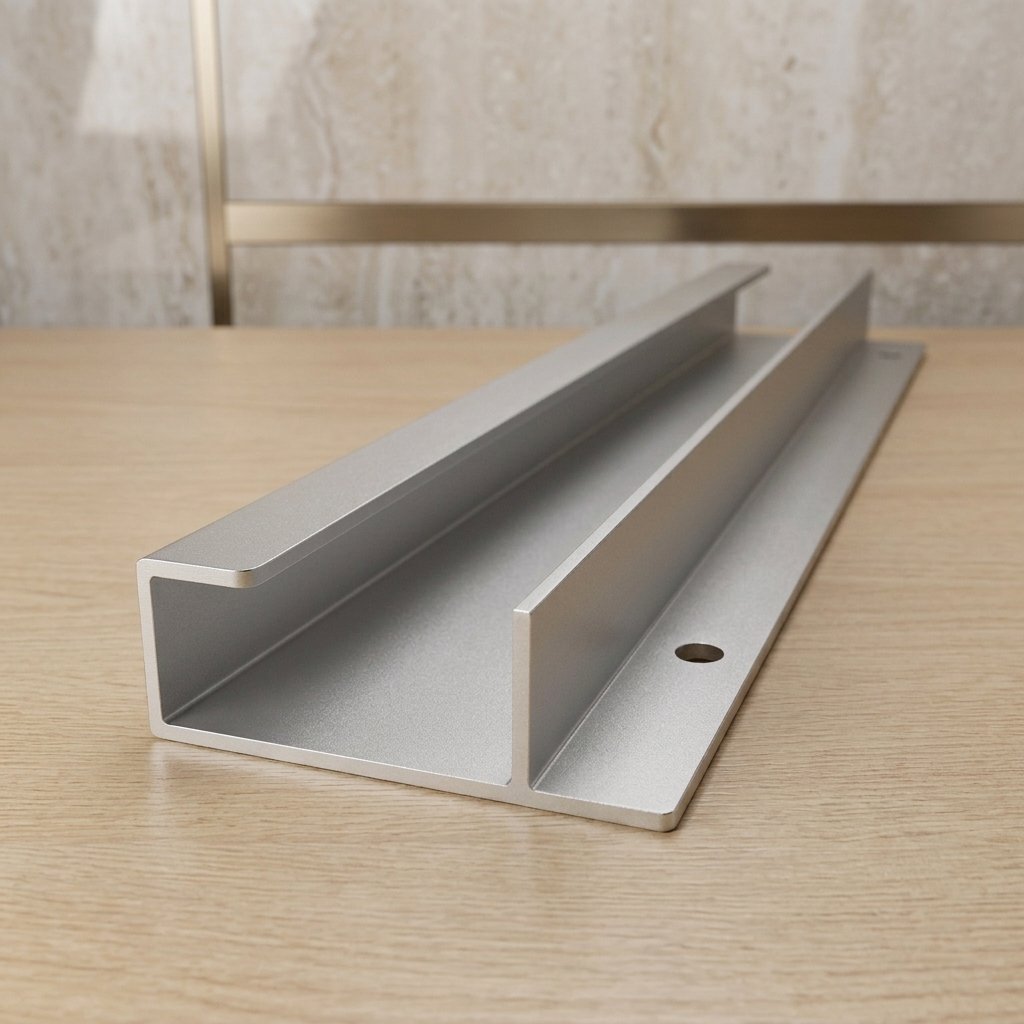
For gold brushed anodized aluminum handles, ΔE < 5 is a relaxed industrial tolerance — not a premium cosmetic target. It means “same gold family, no obvious mismatch,” not “identical champagne/gold tone.” We control it by locking every variable that shifts hue, brightness, and saturation.
1. Lock the alloy and material lot
Gold anodizing is very sensitive to metallurgy.
Preferred: 6063-T5 / 6061-T6 for extrusions/machined handles
Avoid mixing 6061 / 6063 / 5052 / 7075 in one order
Use one mill lot for one project/batch
No recycled/secondary billet for color-critical handles
Different Si, Mg, Cu, Zn content changes pore structure and makes gold look bronze, gray, or brown.
2. Standardize the brushed surface
“Brushed gold” is not one finish. We fix:
abrasive type / grit size
brush direction
pressure and pass count
surface roughness target (e.g. Ra)
no hand sanding, no mixed textures on visible faces
Same dye looks different on polished vs brushed vs blasted surfaces because light scatters differently.
3. Control anodizing chemistry and process
For Type II dyed gold anodize, we control:
sulfuric acid concentration
bath temperature (typically ~18–22 °C for decorative anodizing)
current density
anodizing time → oxide thickness
dissolved aluminum / bath aging
rinsing and desmut steps
Thicker oxide = deeper/darker gold; thinner = lighter/champagne. Bath drift is the #1 cause of batch-to-batch shift.
4. Control the gold dye bath
Gold is one of the trickiest colors because “champagne / warm gold / yellow gold / bronze-gold” are close.
We control:
dye brand and formula
dye concentration
dye bath temperature
immersion time
pH
bath contamination and refresh cycle
Small dye drift can move the handle from elegant gold to bronze.
5. Sealing control
Sealing changes perceived richness:
hot-water seal
nickel-acetate seal
nano/silica seal
Under-sealing → fade; over-sealing → muted/dull gold. We log seal temperature, time, and pH.
6. Racking and current distribution
Handles are long and narrow, so edge/center/pocket differences happen.
uniform racking
avoid overcrowding
keep contact marks on non-visible areas
don’t mix complex geometries with simple ones in one rack if color match matters
7. Master sample + measurement system
We do not rely on “looks OK.”
approve a golden master handle
measure with calibrated spectrophotometer
use CIEDE2000 (ΔE00), D65 illuminant, 10° observer
record L*, a*, b*
compare production part vs master, not just part vs part
Note: ΔE76 is older and more permissive; for gold anodized parts we specify ΔE00.
8. In-process QC rules
Typical control plan:
First Article: full color + film thickness + seal check
Each batch: 3–5 handles measured from different rack positions
Film thickness: eddy-current gauge, e.g. 10–18 µm depending on spec
Acceptance: ΔE < 5 vs master
Better cosmetic target: ΔE ≤ 2–3
Premium electronics/furniture: ΔE ≤ 1.5–2
Out-of-tolerance batch → re-anodize or segregate, not “ship and hope”
9. Packaging and storage
Gold anodized surfaces can shift from:
fingerprints
acidic/alkaline cleaners
humidity
UV exposure
We use clean gloves, anti-tarnish bags, dry storage, and warn end users: neutral pH cleaner only.
Bottom line
To keep gold brushed aluminum handles within ΔE < 5, we control:
Alloy lot → brushed texture → anodize bath → gold dye bath → sealing → racking → spectro QC.
ΔE < 5 is easy if process is stable.
ΔE < 2 is where real anodizing discipline shows.